How to Practice Squash Alone and Actually Improve
Quick Answer: Solo practice works when you pick one target, one shot, and a measurable rep count. It fails when you just rally against the front wall, which trains a comfortable mid-court hit you will never use in a match. The highest-value solo session is 40 minutes: ten of warmup and length, twenty on one specific shot with a target, and ten of movement to the T.
An empty court is the cheapest coaching there is. It is also the easiest place in the sport to feel productive while changing nothing about how you play.
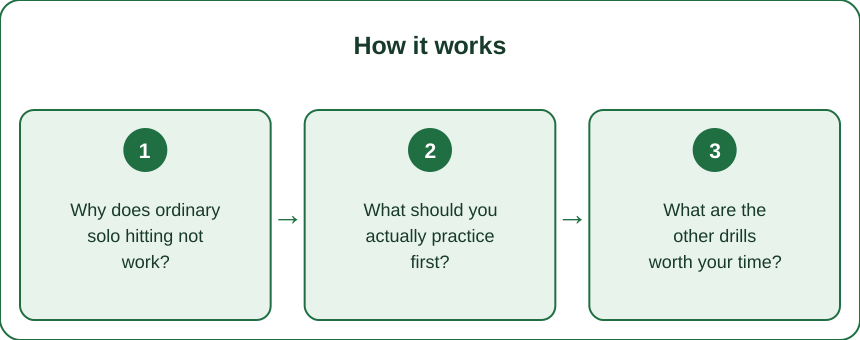
Why does ordinary solo hitting not work?
Because you unconsciously feed yourself the ball you like.
When you hit against the front wall with no structure, you set up your own next shot — and you will always set it up in your comfort zone. Mid-court, waist height, no pressure, plenty of time. That is the shot you are already good at.
Meanwhile the shots that actually lose you matches are the awkward ones: the ball tight to the side wall, the one dying in the back corner, the low one you have to reach for. You will never feed yourself those, which is precisely why they stay bad.
The second problem is that unstructured hitting has no feedback. You do not know whether you hit fifty good shots or five, because nothing is being counted and nothing is being aimed at. Improvement requires knowing whether the last rep was better than the one before.
And the third: you get tired doing the wrong thing. Forty minutes of hard hitting is genuine physical work, which makes the session feel productive. Feeling worked and having improved are not the same thing, and the sensation of the first reliably masks the absence of the second.
Structure fixes all three at once. A target gives feedback, a rep count gives progression, and a defined shot stops you drifting back to what you already do.
What should you actually practice first?
Length. It is the foundation of the whole game and it is the shot solo practice improves fastest.
A good length shot dies in the back corner, forcing your opponent behind you and giving you the T. It is not glamorous and it decides more matches at club level than any other shot.
The drill: straight drives from the service box.
- Stand in the service box, feed yourself a ball, and hit straight down the wall.
- The target is the ball’s second bounce landing in the back quarter of the court — behind the short line and near the back wall.
- Let it come back, take it again, repeat.
Give yourself a measurable standard. Count how many out of twenty land in the target zone. Write the number down. That single habit turns practice into training, because next week you have something to beat.
Then add the wall. The tighter your drive runs along the side wall, the harder it is to return. Put a piece of tape on the side wall about a foot out from it and aim to keep the ball inside that line.
Do both sides. Everyone practices their strong side and avoids the other, which is exactly why the weak side stays weak. Spend more time on your backhand length than your forehand — reversed from what feels natural, and it is the correction that pays most.
What are the other drills worth your time?
Four, and they cover most of what solo practice can actually teach.
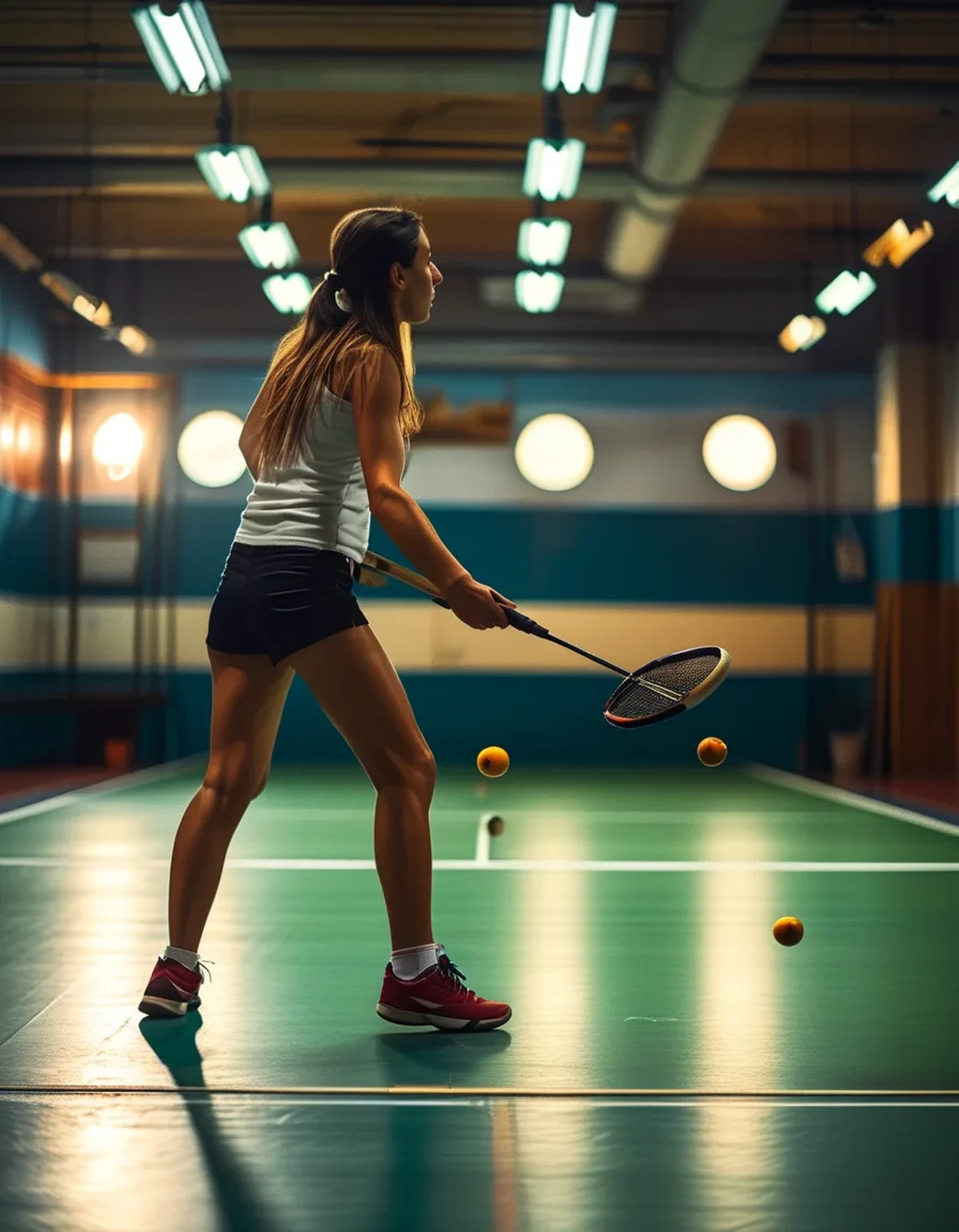
Boast and drive, alone. Hit a boast off the side wall into the front, chase it, and drive it back down the wall. This is the best solo drill in squash because it combines a shot with real movement and it reproduces an actual match pattern. Ten each side is a genuine workout.
Volley drives. Stand near the T and volley straight up and down the wall without letting the ball bounce. Volleying is the single biggest difference between club players and better club players — taking the ball early steals time from your opponent. Start with ten in a row and build.
Back corner work. Feed the ball high into the back corner and practice digging it out. This is the shot nobody practices because it is uncomfortable, and it is the one that ends rallies against you. Even ten minutes a week noticeably changes how you handle deep balls.
Drop shots to a target. Put a racquet head-down in the front corner as a target. Feed yourself a mid-court ball, drop it, and see how close you get. Count out of twenty.
And ghosting, which requires no ball at all: move from the T to each of the four corners with a full lunge and racquet preparation, then recover to the T. Six sets of a minute each is brutal and it is the closest thing to match movement you can do alone.
Myth vs Fact: Solo Squash Practice
Myth: Solo practice cannot help because there is no opponent. Fact: Technique and movement are both trainable alone, and they are the two things most club players actually need. What you cannot train alone is tactical decision-making under pressure — which is what matches are for. Use each for what it is good at.
Myth: Hitting the ball harder in practice builds power for matches. Fact: Hitting hard with no target trains you to hit hard with no target. Power in squash comes from technique and timing far more than effort, and the fastest way to lose accuracy is to practice at a pace you cannot control. Hit at 80% and aim.
Myth: Forty-five minutes alone is worth forty-five minutes of a match. Fact: For technique, it is worth considerably more, because you get hundreds of repetitions of one shot instead of a handful. For fitness and decision-making, considerably less. Neither replaces the other.
Myth: You need a coach to know what to work on. Fact: A coach helps enormously and is not required to start. Film thirty seconds of yourself hitting on your phone — propped against the back wall — and you will see something obvious within one viewing. Most club players have one glaring thing, and it is usually visible immediately.
Myth: The ball needs to be warm for solo practice to be useful. Fact: A cold ball bounces less and dies faster, which makes it harder to keep a rally going and easier to practice digging balls out of the back. That is not a problem — early in a session it is actually good practice for exactly the shots you avoid.
How should a solo session be structured?
Forty minutes, three blocks, one focus. Do not improvise it on the way to the court.
Minutes 0–10: warm up properly and warm the ball. Easy hitting from mid-court, gradually increasing pace, both sides. Include some actual movement — lunges, side steps, arm circles — because squash asks for extreme ranges and going in cold is how people strain a calf or an achilles.
Minutes 10–30: the focus block. One shot. Twenty minutes. A target and a count. This is where the improvement happens and it is the part people cut short because it is repetitive and unglamorous. Pick your shot before you arrive, based on what lost you points in your last match.
Minutes 30–40: movement. Boast-and-drive or ghosting. This is the conditioning portion and it also rehearses recovery to the T, which is the habit that most improves match results.
Then write two lines down. What you practiced, and the number you hit out of twenty. A notebook or a phone note turns twelve scattered sessions into a visible trend, and seeing the trend is what keeps people coming back to the boring drill that is actually working.
Frequency beats duration. Two 40-minute solo sessions a week does more than one 90-minute one, because motor learning consolidates between sessions rather than during them.
And rotate the focus every two or three weeks, not every session. A shot needs a few hundred repetitions before it starts showing up in matches, and switching focus weekly means never getting there.
FAQ: Solo Squash Questions, Answered
How do I keep the ball warm on my own?
Hit continuously for the first several minutes rather than stopping between shots, and use a slower ball if the court is cold. Many club players practice with a single-yellow-dot or red-dot ball for solo work — it bounces more and stays warmer, which lets you get more repetitions in, and there is no downside for technique practice.
Should I practice serves alone?
Yes, and almost nobody does. The serve is the only shot in squash entirely under your control, and it is fully practicable alone. Ten minutes hitting lob serves to a target high on the side wall will win you points immediately, because a good lob serve is genuinely hard to attack.
Is solo practice hard on your body?
It can be, because you control the pace and tend to hit more shots per minute than in a match with none of the natural rest between rallies. Warm up properly, build volume gradually, and take the lunges seriously — squash asks a lot of calves, achilles tendons, and knees. If something hurts rather than fatigues, stop. This is general information, not medical advice.
TL;DR:
- Unstructured hitting trains the comfortable shot you already have — a target and a rep count fix that
- Start with straight length from the service box, and spend more time on your weak side than your strong one
- Boast-and-drive is the best single solo drill because it pairs a real shot with real movement
- Structure it as 10 minutes warmup, 20 minutes on one shot, 10 minutes of movement, and write the number down
- Rotate focus every two or three weeks, not every session
The empty court is the cheapest improvement available in this sport. It just requires deciding what you are practicing before you walk on, which takes about ten seconds and changes everything about what the next forty minutes are worth.
Keep Reading
This article is for general informational and styling purposes only. Fit, sizing, and product availability may vary.