Starting Squash: The Court, the Kit and the First Month of the World's Best Cardio
Squash’s reputation as the world’s best cardio workout deserves its follow-up question — how does a beginner actually start? The answer is friendlier than the sport’s intensity suggests: cheap kit, forgiving entry formats and a first month with a clear map.

The Entry Logistics
Getting on court: the court access (the leisure-center and university courts at modest hourly rates — the club memberships deferred until hooked per the trial doctrine; the off-peak booking economics), the kit minimum (the borrowed-or-budget racket to start — the head-light beginner rackets under fifty when buying; the non-marking indoor court shoes being the real requirement per the shoe doctrine: the running shoes’ lateral weakness from the court doctrine; the eye protection strongly advised and required for juniors per the safety doctrine), the ball literacy (the ball DOTS decoded — the beginner’s single-yellow-or-red bouncier balls; the double-yellow pro ball being cold-and-dead for beginners: the wrong ball ruining more first games than anything; the warm-ball ritual learned), the partner-finding (the club beginner nights and internal ladders — the similarly-new partner beating the expert demolition per the buddy doctrine; the solo-practice legitimacy from the start), and the coaching shortcut (the two-three intro lessons compressing months — the beginner-group courses per the lesson doctrine).
The Fundamental Skills
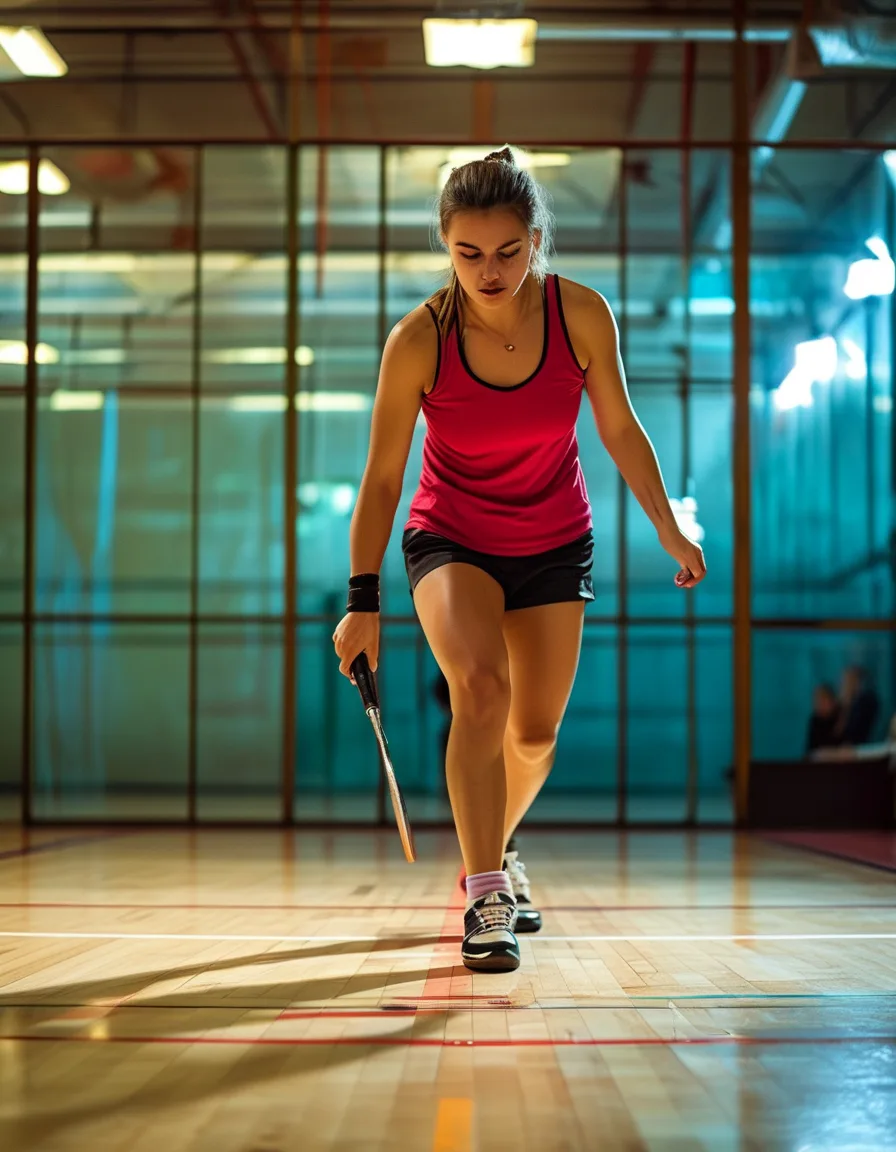
The first curriculum: the grip-and-swing basics (the continental-ish grip — the open racket face; the compact swing over the tennis loop; the wrist firm through contact), the serve entry (the simple lob serve to start — the box rules learned; the serve as the rally’s handshake, not a weapon yet), the straight-drive foundation (the rail shot down the wall being squash’s bread and butter — the deep-and-tight target; the drive practiced solo: the wall never tiring per the solo doctrine), the T-position concept (the court’s center-ish home base — the hit-and-return-to-T rhythm being the sport’s core movement pattern; the T-discipline separating beginners fastest), the watching-the-ball habit (the turn-and-track skill — the ball watched onto the back wall; the beginner’s face-the-front-wall instinct retrained), and the safety essentials (the swing-space awareness — the stroke-and-let rules learned early; the never-turning-blind rule; the eye-guard case restated per the safety doctrine).
The First Month
The expectations map: week one (the rally-counting games — the cooperative longest-rally target beating competitive scoring; the ball kept warm, the lungs surprised; the fitness honesty from the cardio doctrine: the intervals disguised as fun), week two (the serve-and-drive focus — the first scored games at gentle stakes; the DOMS report from the DOMS doctrine: the lunging legs and the forearm), weeks three-four (the T-movement clicking — the rallies lengthening; the first ladder-or-league entry per the community doctrine; the addiction documented: the squash convert timeline being famously short), the fitness-building note (the sport building its own fitness — the off-court intervals from the interval doctrine optional-but-accelerating; the squash-specific legs from the leg doctrine), the injury-prevention basics (the warm-up non-negotiable for a lunge-sprint sport per the warm-up doctrine — the calf-and-Achilles care from the calf doctrine; the eye protection restated), the improvement path (the weekly game plus one solo-practice session — the lesson monthly; the progression doctrine applied), and the closing pitch (the forty-five minutes that outburn most workouts while feeling like a chess match at sprint pace — the world’s-best-cardio claim from the cardio doctrine, now personally testable; the court, booked for Tuesday). Bouncy ball, court shoes, rally games first: the best cardio, entered gently.
Start friendly: leisure-center courts, a budget racket, non-marking court shoes and — critically — the bouncy beginner ball, not the dead double-yellow. Learn the straight drive and T-position, play cooperative longest-rally games before scoring, and wear eye protection; the convert timeline is famously short.
Keep Reading
This article is for general informational and styling purposes only. Fit, sizing, and product availability may vary.