Squash Fitness: The Off-Court Training for On-Court Speed and Stamina
Squash punishes the untrained body precisely — the lunging legs, the sprint-recover engine, the rotating core — and two off-court sessions a week transform both your game and your day-after. The squash-fitness guide: the demands, the week and the prevention.

The Demands Profile
What the court asks: the lunge economy (the deep front-corner lunges hundreds per match — the single-leg strength-and-flexibility combination being squash’s signature demand per the leg doctrine), the sprint-recover engine (the T-to-corner bursts with incomplete recovery — the repeated-sprint profile from the interval doctrine; the rally as the interval, the between-points as the rest), the rotation power (the swing driven by hips-and-torso from the rotation doctrine — the core that both generates and decelerates), the deceleration loads (the stopping being harder than starting — the eccentric leg strength that prevents the knee-and-ankle toll per the landing doctrine), and the match-length endurance (the 45-minute engine under the intervals — the aerobic base from the base doctrine deciding the fifth game).
The Training Week
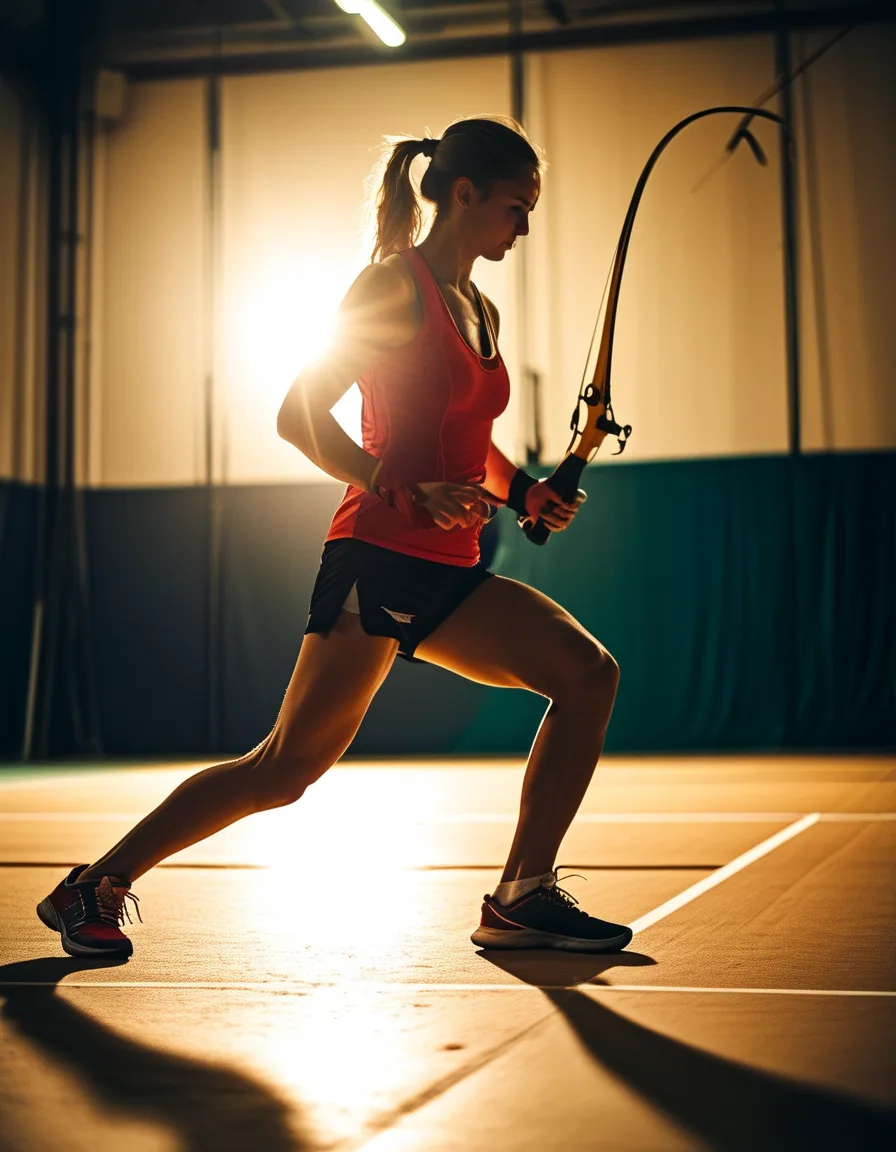
The two-session transformation: session one — the legs-and-lunges day (the split squats and walking lunges as the core — the deep-lunge pattern loaded progressively per the progression doctrine; the lateral lunges for the width game; the calf-and-Achilles work from the calf doctrine; the Nordic-curl hamstring insurance from the hamstring doctrine), session two — the engine-and-agility day (the court-sprint intervals or the shuttle runs — the 20-40 second efforts with short rests mimicking rallies per the interval doctrine; the ghosting practice: the shadow squash movement patterns being the sport’s own drill — the corner-to-T patterns at speed; the agility-ladder tier from the agility doctrine), the core thread (the rotation-and-anti-rotation work spread across both — the medicine-ball throws and pallof presses from the core doctrine), the mobility ration (the hip-openers and thoracic rotation from the mobility doctrine — the deep-lunge range earned off court; the post-match stretch routine), and the week placement (the sessions 48 hours from match days per the recovery doctrine — the match itself counting as the hardest interval session per the load doctrine).
The Prevention Priorities
Staying on court: the warm-up non-negotiable (the squash cold-start being the calf-tear factory — the jog-lunge-and-stride ramp from the warm-up doctrine; the five-minute solo-hitting warm-up doubling as ball-warming per the beginner doctrine), the Achilles-and-calf care (the sport’s signature injury zone — the eccentric heel drops as the insurance from the tendon doctrine; the sudden-push-off loads respected), the knee protection (the deceleration strength from session one being the knee’s armor — the lunge mechanics with knee-tracking per the knee doctrine), the eye-safety restatement (the goggles being cheap versus the alternative — the small-fast-ball physics per the safety doctrine), the load management (the squash addiction’s volume creep — the every-day-court-time ambition being the overuse pipeline per the load doctrine; the two-three matches weekly plus training being plenty), the recovery basics (the post-match protein-and-sleep from the recovery doctrine — the day-after walk per the DOMS doctrine), and the closing frame (the two weekly sessions converting the puffing beginner into the fifth-game problem — the lunges that hold, the engine that recovers between rallies, the calves that survive the season; the court speed, built in the gym). Lunges Tuesday, ghosting Thursday, warm up like it matters: the game, transformed off court.
Squash is lunges plus repeated sprints: train split squats, lateral lunges and eccentric heel drops one day, ghosting patterns and shuttle intervals another — both 48 hours from matches. The cold-start calf tear is the sport’s classic injury; warm up every time and cap the addiction at two-three matches weekly.
Keep Reading
This article is for general informational and styling purposes only. Fit, sizing, and product availability may vary.