Squash Racquet String Tension Changes Your Whole Game — Here's What Beginners Get Backwards
Quick Answer: Lower string tension gives more power with a larger sweet spot and less control; higher tension gives more control and precision with less raw power and a smaller margin for error. Most beginners are better served starting lower, not higher as often assumed.
It’s a common assumption that tighter strings mean a “better” or more serious racquet setup. In reality, tension is a trade-off dial, and beginners chasing high tension for a “pro feel” often end up fighting a smaller sweet spot before their technique is consistent enough to need it.

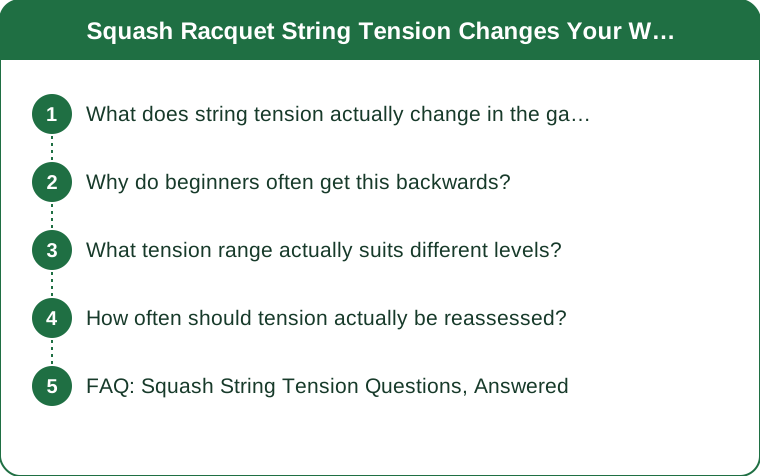
What does string tension actually change in the game?
Tension controls the trampoline effect of the strings: looser strings flex more on contact, launching the ball with more power and forgiveness across a larger sweet spot; tighter strings flex less, giving more precise ball placement but requiring cleaner contact to get the same power.
Neither is objectively better — they suit different skill levels and playing styles.
Why do beginners often get this backwards?
There’s an assumption that higher tension equals more “serious” or advanced equipment, similar to assuming a stiffer shoe is always more supportive. In practice, high tension punishes off-center hits — exactly the mis-hits beginners make most often while building consistent technique.
A beginner on high tension often experiences more mis-hits and less power than the same beginner on a lower, more forgiving tension.

What tension range actually suits different levels?
Beginners: lower end of the recommended range for their racquet (often around 24-26 lbs depending on frame spec) for power and forgiveness while technique develops.
Intermediate: mid-range tension as ball control becomes more consistent and shot placement starts to matter more than raw power.
Advanced/competitive: higher tension for maximum control and precision, since consistent clean contact is no longer the limiting factor.
How often should tension actually be reassessed?
Strings lose tension gradually with play — a noticeable drop typically occurs within 20-30 hours of regular play, after which the racquet starts feeling “dead” or overly springy compared to when freshly strung.
Restringing at that point, and reassessing whether your tension preference has shifted as your skill level changes, keeps the setup matched to your actual game rather than a one-time decision.
FAQ: Squash String Tension Questions, Answered
Does higher tension strings break more often?
Slightly, yes — the added stress on strings at higher tension does modestly increase breakage risk compared to lower tension setups.
Can I feel the difference between a few pounds of tension?
Most players can notice differences of 2-3 lbs once they’ve played enough to calibrate their feel; casual or new players often can’t distinguish small changes reliably yet.
Should I ask my stringer for a specific number or just “beginner setup”?
Giving an actual number (within your racquet’s recommended range) produces more consistent results than a vague request, since “beginner” setups vary by shop.
TL;DR:
- Lower tension = more power, bigger sweet spot, more forgiving of mis-hits
- Higher tension = more control, less power, less forgiving — suits advanced play
- Beginners are usually better on lower tension, not higher, despite assumptions
- Restring and reassess tension every 20-30 hours of regular play
Start lower than you think you should, and raise tension only as your contact gets more consistent.
Keep Reading
This article is for general informational and styling purposes only. Fit, sizing, and product availability may vary.