Why You Keep Getting Stuck in the Back Corners and How to Get Out
Quick Answer: The back corners eat club players for three reasons: they arrive facing the front wall, which closes off the swing; they crowd the ball, which deletes the space a swing needs; and they insist on hitting straight from positions where straight is not available. The designed exit is the boast — playing the ball into the side wall so it travels to the front — plus a turned body, a small final step, and the patience to let the ball come off the back wall when it will. Corners stop being traps the week you stop treating the boast as a failure.
The corner is not where rallies end. It is where they reset — if you know the reset shot.

Why does the corner eat your swing?
Because everything a swing needs — space, alignment, and time — is exactly what the corner takes away, and beginner instincts surrender the rest.
The first thief is body orientation. Most players run back facing the front wall, the way they face it at mid court. Arrive like that and the corner is behind your hip: the racquet has no path to the ball except a cramped chop across your own body. Turned sideways — chest facing the side wall — the same ball sits in front of you with a full swing available. One rotation changes the entire geometry.
The second thief is proximity. Under pressure, players chase the ball right into the corner and end up standing on top of it, and a squash swing needs a racquet’s length of room. The professional habit is the opposite: the last step toward a back corner is a small one, braking early, leaving the ball an arm and racquet away.
The third thief is the back wall itself. Deep balls come off it with less pace and drop fast, and impatient players swing before the ball has finished its bounce, meeting it behind their body. A ball with any pace will come back off the wall toward you — waiting a beat converts an impossible ball into a playable one, and knowing which balls will rebound enough to play is most of what separates intermediate from beginner back courts.
Stack the three and the classic corner disaster explains itself: front-facing, crowded, and early, trying to force a straight drive from a position that offered no straight drive. The ball dies, the point ends, and the corner gets the blame.
What is the escape sequence that actually works?
Turn, brake, wait, and pick between three exits — with the boast as the designed one.
Turn as you travel. Move to the corner sideways-on, racquet already up, chest to the side wall. The preparation happens on the way, not after arrival — there is no time for both later.
Brake with a small final step. Arrive balanced, ball a full swing away. If you overran it, step back out; playing cramped is worse than playing late.
Read the rebound. If the ball will come off the back wall, let it. If it is dying, you needed to intercept earlier — that is next rally’s lesson, not this swing’s problem.
Then choose the exit:
The straight drive, when the ball sits far enough off the wall — still the best shot in squash when available. Compact swing, aim high on the front wall, send it deep.
The boast, when it is not. Hit the ball into the side wall so it angles out to the front wall — the shot built precisely for balls too deep and too tight to drive. Aim to strike the side wall at a spot slightly in front of you, racquet open, and let the walls do the transport. A decent boast from a hopeless position restarts the rally; a forced drive from the same position ends it.
The high lob or lofted cross court, when you are stretched and need time — up high, deep, and slow, buying you the seconds to reclaim the middle.
The mental unlock is reclassifying the boast. Club players treat it as an admission of defeat and avoid practicing it, which guarantees the corner stays a trap. The boast is not surrender — it is the corner’s dedicated exit door, and players who own it walk into deep court without the flinch that opponents can read from across the court.
5 Corner Mistakes Club Players Make
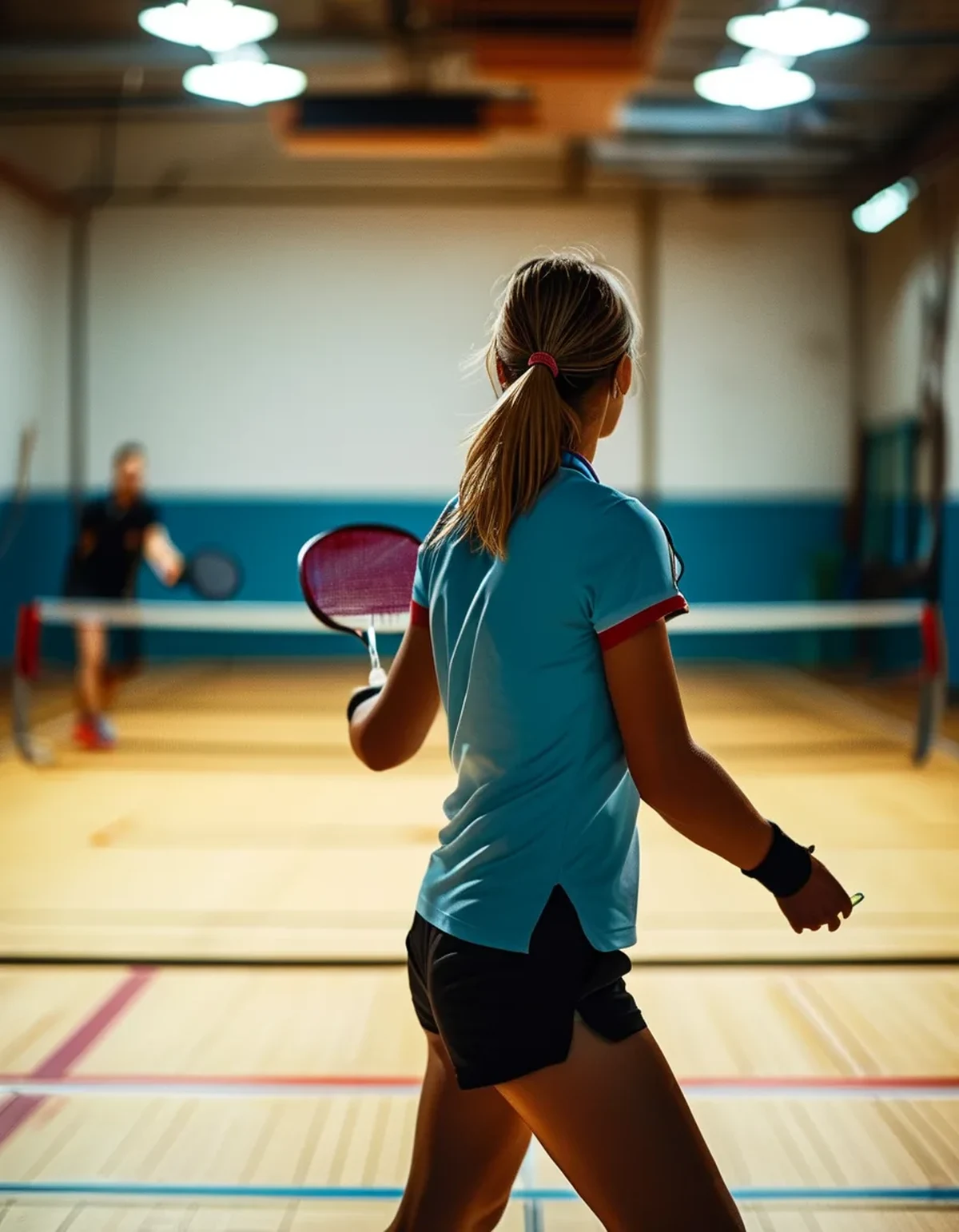
1. Facing the front wall on arrival. The root error underneath most of the others. If one habit changes this month, make it the sideways approach — the swing space it creates makes every other fix easier.
2. The giant final lunge into the corner. A big last step carries you onto the ball and leaves you leaning, off balance, with no room. Small braking steps in, one push to recover out.
3. Swinging full size in a quarter size space. The corner rewards a compact, punchy swing — shorter backswing, firm wrist, high follow through for drives. The full flowing mid court swing clips walls and mistimes rebounds.
4. Panic hitting the ball early instead of letting it come off the back wall. Impatience converts playable balls into impossible ones. The wall is doing you a favor; accept it.
5. Never practicing alone back there. Twenty minutes of solo corner work — feeding balls in, turning, boasting out — teaches more than a season of avoiding the area in matches. It is the least glamorous practice in squash and the highest return, and almost nobody above you on the club ladder skipped it.
How do you train it as the fall season starts?
Deliberately, briefly, and now — because league season is arriving and the corners are where fall matches get decided.
Fall is squash’s real new year. Club ladders reboot, box leagues restart, and court booking sheets fill from September on. The players who spent late August on structure — and back corners are the highest value structure there is — show up to round one with an escape hatch their spring selves lacked.
A simple progression that fits any solo session:
Week one: feed and turn. Toss or hit balls softly into a back corner, practice arriving sideways with the small last step, and just catch the ball at the right contact point. Footwork without outcome pressure.
Week two: add the boast. Same feeds, now playing the side wall exit. Aim for boasts that reach the front wall and die short — attacking boasts come later; surviving boasts come first.
Week three: alternate exits. Feed, then choose drive or boast based on how far off the wall the ball sits. The decision is the skill; the shots are just its output.
Two seasonal practicalities: courts run cooler as clubs ease off summer air handling, and a cold squash ball barely bounces — deep balls die faster in a cold court, which makes corner patience and longer warmups matter more from October onward, not less. And dress for lunging: this is a sport of deep reaches, so shorts or fitted leggings that move with a full stretch beat anything baggy that catches a racquet hand on the follow through.
One safety note that belongs in every corner conversation: the swing zone in deep court is where opponents get hit. Check where your opponent is before a big backswing, and play a let rather than a swing through traffic. No rally is worth a racquet edge.
FAQ: Back Corner Questions, Answered
What is the difference between a boast and just hitting the side wall by accident?
Intention and geometry. A deliberate boast strikes the side wall at a chosen spot with an open racquet so the ball travels to the front wall and dies short. The accident is a mishit drive that clips the wall and sits up mid court. Practice converts the second into the first surprisingly fast.
Should I boast every time I am in the back corner?
No — the straight drive is still the better shot whenever the ball sits far enough off the walls to allow it, because it keeps your opponent pinned deep. The boast is for the balls too tight and too deep to drive. The skill is the choice, made ball by ball.
My boasts sit up in the middle and get killed. What is wrong?
Usually too flat and too hard — a boast that hits the side wall low and fast rockets out into the middle. Open the racquet face, take pace off, and aim the ball to reach the front wall on its way down. Height on the side wall, softness in the hand.
How do I stop panicking when the ball goes behind me?
Repetition where nothing is at stake. The panic is unfamiliarity wearing a costume — after two hundred solo corner balls, deep court is just another part of the room. That is the entire trick, and it takes three weeks.
TL;DR:
- Corners punish front facing arrivals, crowding, and forced straight shots — the three habits that delete your swing space.
- Approach sideways with a small braking step, let deep balls come off the back wall, and keep the swing compact.
- The boast is the designed exit for balls too deep and tight to drive: side wall first, open face, soft hands.
- Train it solo in short weekly blocks now — fall leagues are starting, and cooling courts make deep balls die even faster.
Book twenty solo minutes this week and hit fifty boasts from each corner. Next league night, the deep court stops being enemy territory.
Keep Reading
This article is for general informational and styling purposes only. Fit, sizing, and product availability may vary.