Why Your Shots Keep Dying in the Middle of the Court
Quick Answer: Shots that consistently die in the middle of the court usually mean contact is happening too late or too close to your body, not that you lack arm power — adjusting your contact point slightly further in front and rotating your hips into the shot restores the depth most players are missing.
You’re swinging just as hard as your opponent, but your shots keep falling short in the middle of the court while theirs reach the back wall. This is rarely about strength — it’s almost always about exactly where and how contact happens.

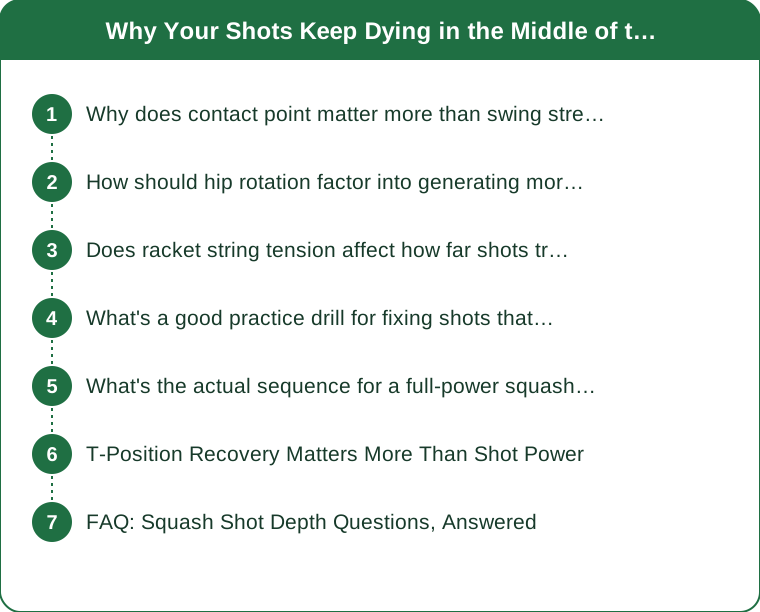
Why does contact point matter more than swing strength for shot depth?
Hitting the ball too close to your body or too late in your swing arc robs the shot of the forward momentum needed to reach the back wall, regardless of how hard you swing. A slightly earlier, more extended contact point channels your body’s rotational power directly into the ball instead of losing it to a cramped, late swing.
Many players unconsciously let the ball get too close before contact because it feels safer or more controlled, which is exactly the habit that causes shots to die short.
How should hip rotation factor into generating more depth?
Rotating your hips and torso into the shot, rather than swinging with your arm alone, transfers much more power into the ball than arm strength ever can on its own. This is the same principle used in virtually every rotational sport — the arm is the final link in a power chain that starts from the ground and hips, not the source of power itself.
Does racket string tension affect how far shots travel?
Yes, to a degree — a looser string tension generally produces more trampoline effect and can add some extra depth on shots hit with correct technique, while a tighter string offers more control at the cost of some power. This is a smaller factor than contact point and hip rotation, so it’s worth fixing technique first before assuming equipment is the issue.

What’s a good practice drill for fixing shots that die short?
Boast-and-drive repetition drills, focused specifically on hitting the ball slightly further in front of your body than feels natural, help retrain the contact point over repeated practice. Recording yourself on video from the side during practice often reveals a late contact point that’s hard to feel in the moment but obvious once you see it.
What’s the actual sequence for a full-power squash swing?
The correct sequence runs legs and hips initiating rotation, torso following, then the arm and racket releasing last — this kinetic chain is what generates real depth and pace without requiring excessive arm effort. Players who rely on arm strength alone are working harder for less result than players using this full-body sequence.
T-Position Recovery Matters More Than Shot Power
Beyond the shot itself, recovering to the T position quickly after each shot often has a bigger impact on winning points than raw shot power, since it determines how much time you have to set up your next contact point properly. A rushed recovery leads directly back into the late, cramped contact that causes shots to die short in the first place — the two issues are closely connected.
FAQ: Squash Shot Depth Questions, Answered
How long does it typically take to fix a late contact point habit?
Most players notice a meaningful improvement in shot depth within 2-3 weeks of deliberate practice focused specifically on earlier contact and hip rotation.
Should beginners focus on power or placement first?
Placement and consistent depth should come before power — a well-placed shot that reaches the back corners is far more effective than a powerful shot that lands in the middle of the court.
Does grip style affect contact point and depth?
Yes, somewhat — a grip that’s too tight can restrict the wrist snap that adds late-stage racket head speed, so a relaxed grip through most of the swing, tightening only at contact, supports better depth.
TL;DR:
- Shots dying short usually mean a late, cramped contact point, not weak arm strength
- Rotate hips and torso into the shot rather than swinging with your arm alone
- Practice hitting the ball slightly further in front of your body than feels natural
- Fast T-position recovery protects your ability to set up a good contact point next shot
More arm effort was never the fix — a slightly earlier contact point and a rotated hip turn will send the ball to the back wall your arm alone never could.
Keep Reading
This article is for general informational and styling purposes only. Fit, sizing, and product availability may vary.